Stone bird statue
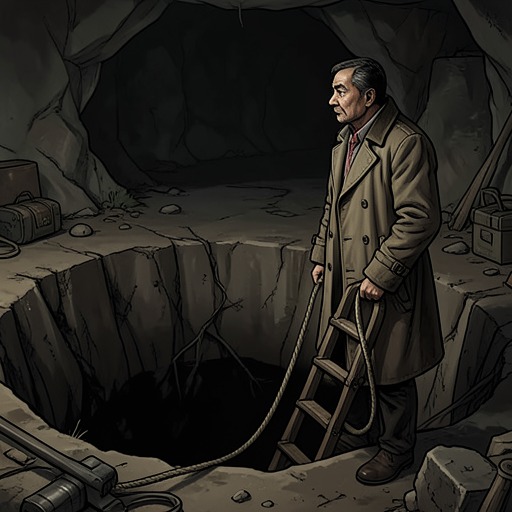
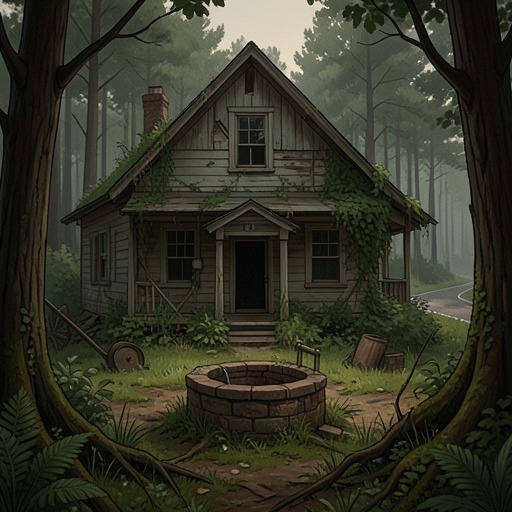
The Wind-Up Bird ChronicleThe Stone bird statue is a fixed, wing-spread figure in the overgrown garden of the vacant Miyawaki house. Toru Okada repeatedly sees it while looking for the missing cat and returning to the property; its impossible readiness for flight makes it an image of arrested movement, while the house and yard around it change from an abandoned domestic space into a demolished lot.## Appearance and SettingThe statue stands on a base reaching chest height, surrounded by weeds and tall goldenrod. Its wings are open as though it might escape the unpleasant garden, though Toru cannot identify what kind of bird it represents. An azalea with bright-red blossoms, aging plastic lawn chairs, and untended growth complete the scene. The statue is not a decorative detail in a cared-for yard: it is the garden’s conspicuous remnant of shape and intention, held in place amid signs of neglect.When Toru first pauses by the property, he leans against a chest-high chain-link fence and studies the garden. The stone bird’s shadow breaks across the undergrowth. A pigeon perched on the television antenna calls monotonously above it, while the garden offers no sign of the cats Toru hopes to find. The contrast between the living pigeon and the immobile sculpture gives the scene two different forms of bird-presence: one can move and sound, while the other remains a silent figure with wings spread.## The Statue During Toru’s VisitsToru’s attention to the statue recurs as he returns to the vacant house. On one visit, he finds the bird in the same position against low, gray clouds, with the house’s second-story shutters nailed shut and the grass grown higher after weeks of rain. The statue appears unchanged while the garden around it thickens and shifts. Toru imagines that it will keep waiting until someone carries it away or smashes it; flight is not among its possibilities. A small white butterfly crosses the grass, uncertainly, then disappears, providing a brief moving counterpart to the bird that cannot take off.The garden also becomes a refuge for Toru. Sheltered beneath the eaves on a plastic lawn chair, he whistles the overture to Rossini’s Thieving Magpie and feels returned to childhood, to a private place where nobody can see him. He thinks of throwing a small stone at a target and chooses the statue in imagination, wanting only to make a little clunk. The remembered childhood game and the contemplated throw bring the sculpture into a personal, quiet scene, but he does not strike it. Its place in the garden remains intact.At another encounter, Toru crosses the yard toward the well. The bird statue continues to stare at the sky as he removes the stones covering the well and lowers a rope ladder into its darkness. The contrast is spatial as well as visual: the sculpture holds its open-winged pose above ground, while Toru prepares to descend below it. The bird marks the garden’s surface as he approaches a concealed depth from which he may not easily return.## Image of Arrested FlightThe statue’s spread wings suggest an imminent departure, but the narrative repeatedly undercuts that suggestion. It is made of stone, cannot take off, and has no means of leaving except through another person’s intervention. Toru recognizes this as he watches it stand in the grass, and the recognition gives the image its force: the posture promises motion while the material guarantees stasis. The statue does not simply represent a bird; it makes the difference between the appearance of freedom and the fact of confinement visible.The setting deepens that tension. The garden once belonged to a house inhabited by the Miyawaki family, but after the family disappears, the house seems to separate itself from its former occupants, as if it had never known them. In the later account of the family’s disappearance, the vacant house is remembered as self-sufficient and disloyal to the happiness it had once shared. Its garden bird belongs to this altered landscape: a made object left behind as both a remnant of domestic arrangement and a figure unable to escape abandonment. That history makes the statue’s apparent readiness to fly especially poignant without resolving it into a single allegorical meaning.## Disappearance with the HouseThe statue’s recurrence ends with the destruction of its setting. In winter, Toru looks through gaps in a high plank fence at the cleared Miyawaki property. The house, paving stones, well, trees, television antenna, and bird sculpture are all gone; only compacted black earth and scattered weeds remain. He can hardly believe that a deep well once occupied the yard or that he climbed down into it. The absent statue is one element in a larger erasure: the rebuilt boundary hides a place whose physical landmarks had organized his visits and memories.The bird thus passes through three conditions in Toru’s experience: a conspicuous object in an overgrown garden, a repeated marker beside his search and descent, and a remembered object removed with the house. Its fixed wings make it an image of frustrated departure, but its disappearance does not show the bird escaping; the property is simply demolished, and the narrative supplies no account of what happened to the sculpture itself. Its final significance rests in that distinction. The statue seems poised to leave, yet it can neither move by itself nor survive the destruction of the place that held it.